Japan, through a Japanese perspective.
This is the English translation of our Japanese-language firsthand review. Our Japanese-language site asks, “Is this place disappointing?” Rather than a list of must-see attractions, this is an honest account of what a Japanese visitor actually saw.
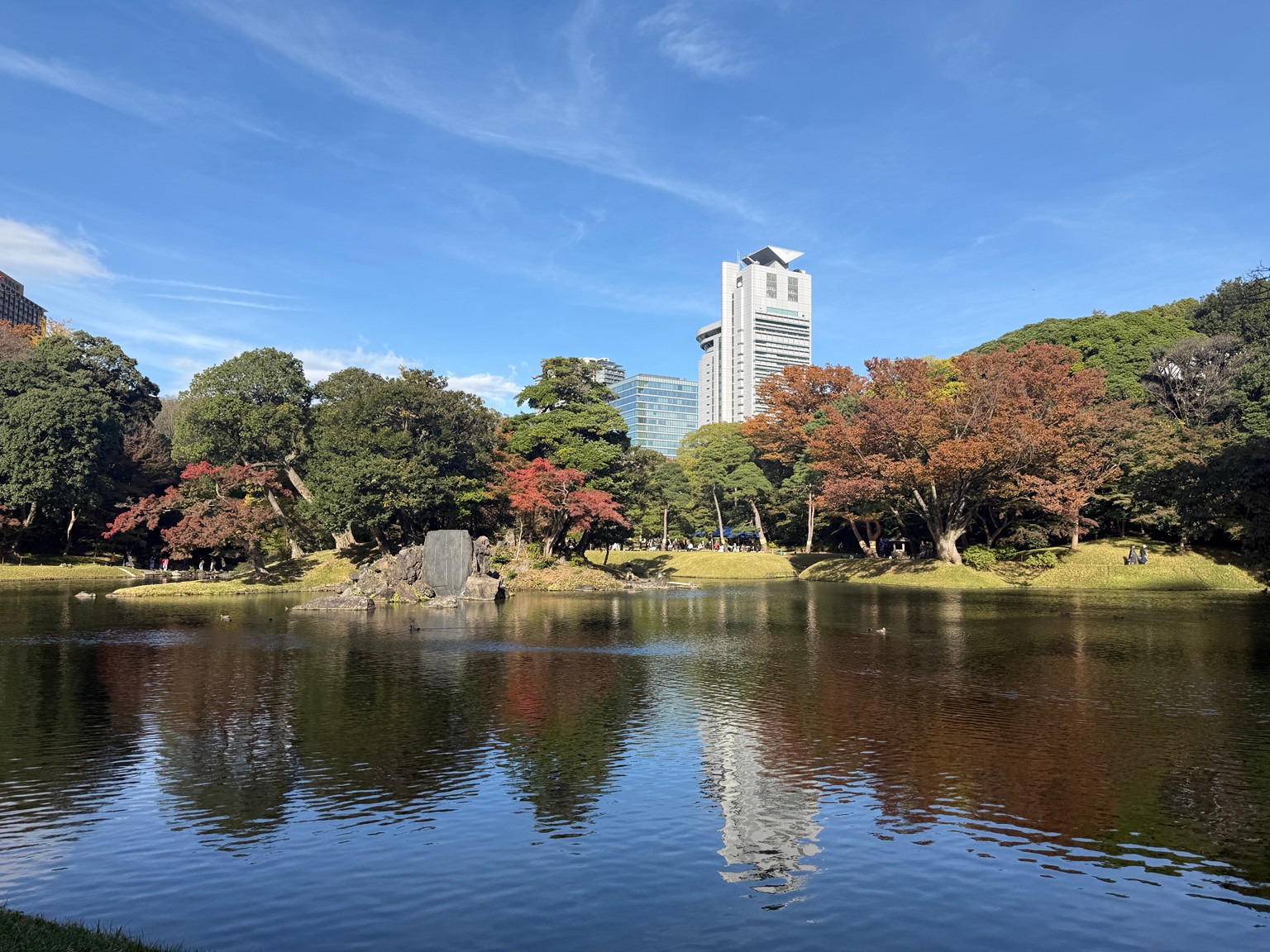
I visited Koishikawa Korakuen on November 16, 2026, hoping for a beautiful autumn garden 🍁. My verdict? I left feeling a little disappointed. Admission was only ¥300, but I expected a paid garden to impress me more than the free Imperial Palace grounds I had enjoyed before.
These are my photographs and personal impressions from that day, not an inspection of the garden’s maintenance. Seasons, sunlight and construction can all change the experience.
- Four things I noticed during my November 16 visit
- Who may enjoy this garden, and who may feel disappointed
- My café experience, admission, access and practical checks
- The verdict: is Koishikawa Korakuen worth visiting?
- Four things that disappointed me
- What I did enjoy, and who may like it
- A highlight: coffee and a Japanese sweet at the West Gate café
- My personal preference: the Imperial Palace
- Location, admission and access
- How to avoid disappointment
- Frequently asked questions
- Bottom line: check the season, foliage and construction first
The verdict: is Koishikawa Korakuen worth visiting?
You may feel disappointed if you expect vivid foliage or flowers throughout the garden.
- You want the exact scenery shown in guide photographs.
- You expect every corner of a paid garden to look freshly manicured.
It may suit you if you enjoy ponds, garden design and subtle seasonal changes.
- You enjoy bridges, islands and reflections as well as autumn colors.
- You want a central Tokyo garden walk with a café break.
Four things that disappointed me
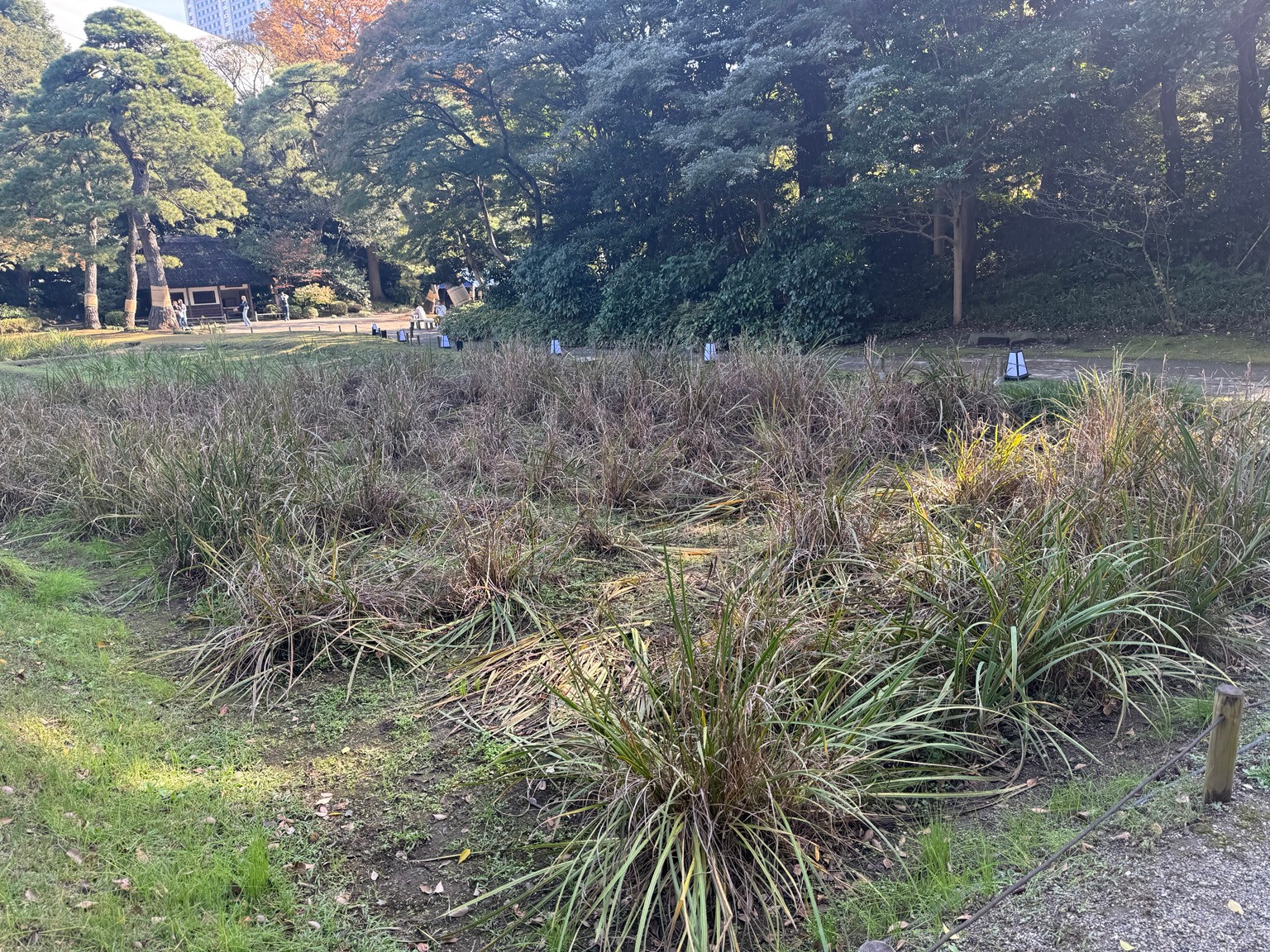
1. Brown plants and a shaded bridge did not match my expectations
If you expect every corner to look freshly manicured, autumn’s faded plants may disappoint you.
Several patches looked dried out to me. Some stone lanterns also appeared dusty. My immediate reaction was that the garden looked less carefully tended than I had expected from a paid attraction.
However, brown plants do not by themselves prove poor maintenance. Seasonal dieback and fallen leaves are part of a garden’s annual cycle. This is my reaction to the appearance, not a claim that the staff had neglected it.
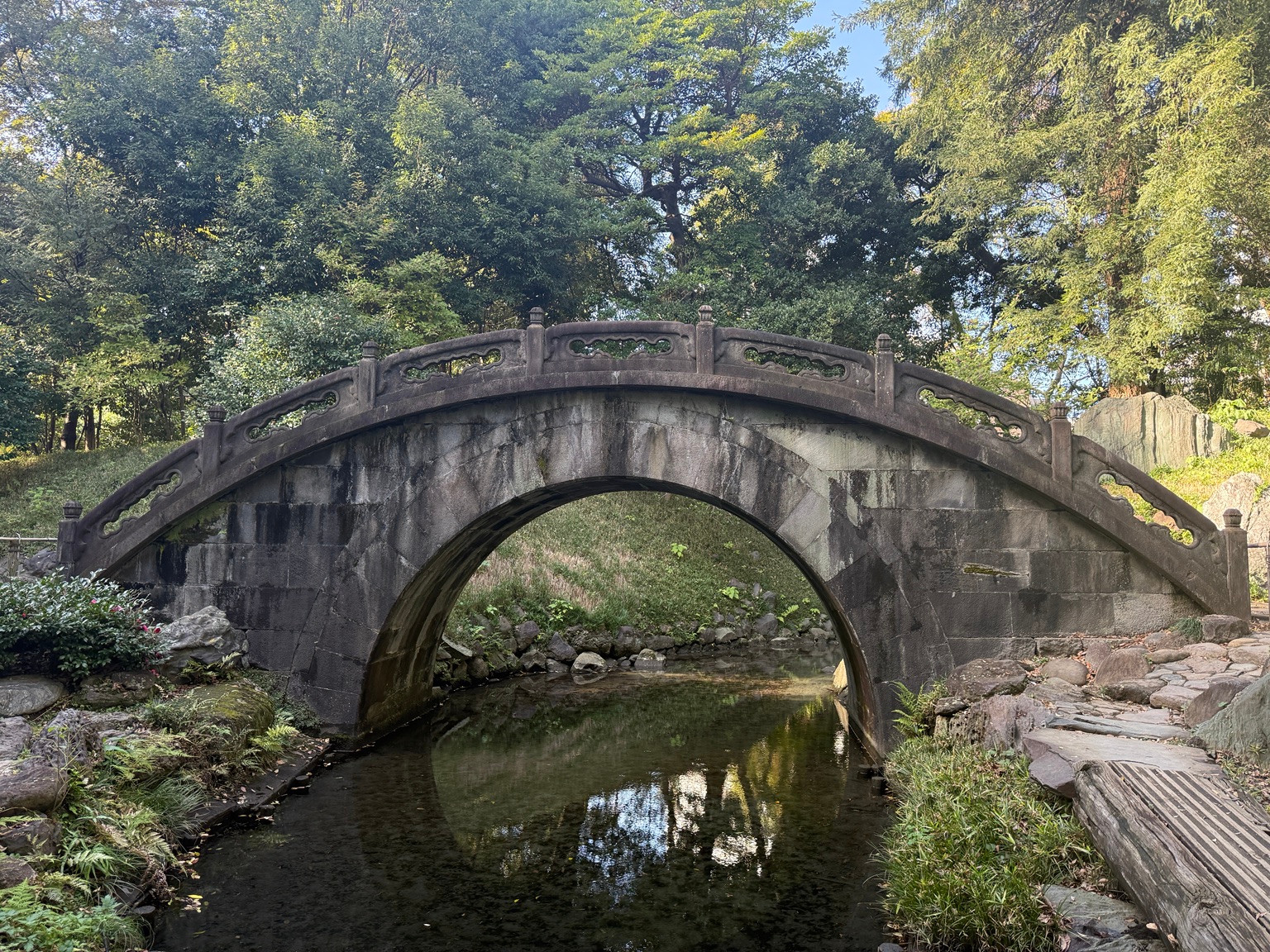
The famous Engetsukyo Bridge was shaded when I saw it. It did not resemble the bright image I had expected. Time of day and light matter as much as the season when planning a photograph 📷.
2. Mid-November did not mean wall-to-wall autumn colors
My rough impression was that about 30% of the garden had autumn color. This is not an official measurement.
There were red and yellow leaves, but also many green trees. If you picture the sweeping autumn colors in photographs of Kyoto’s Kiyomizu-dera, you may be disappointed by what you find here on a particular day.
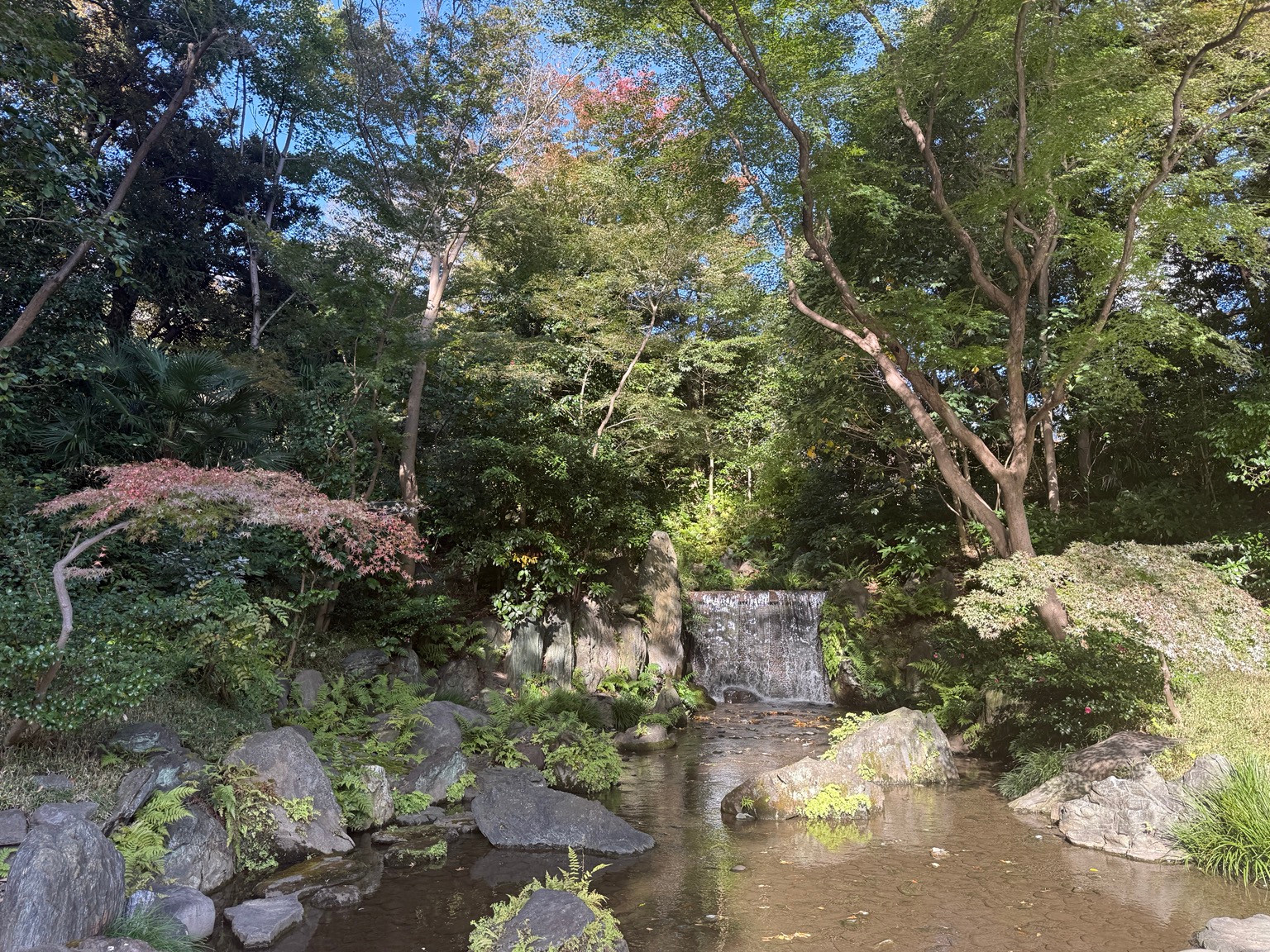
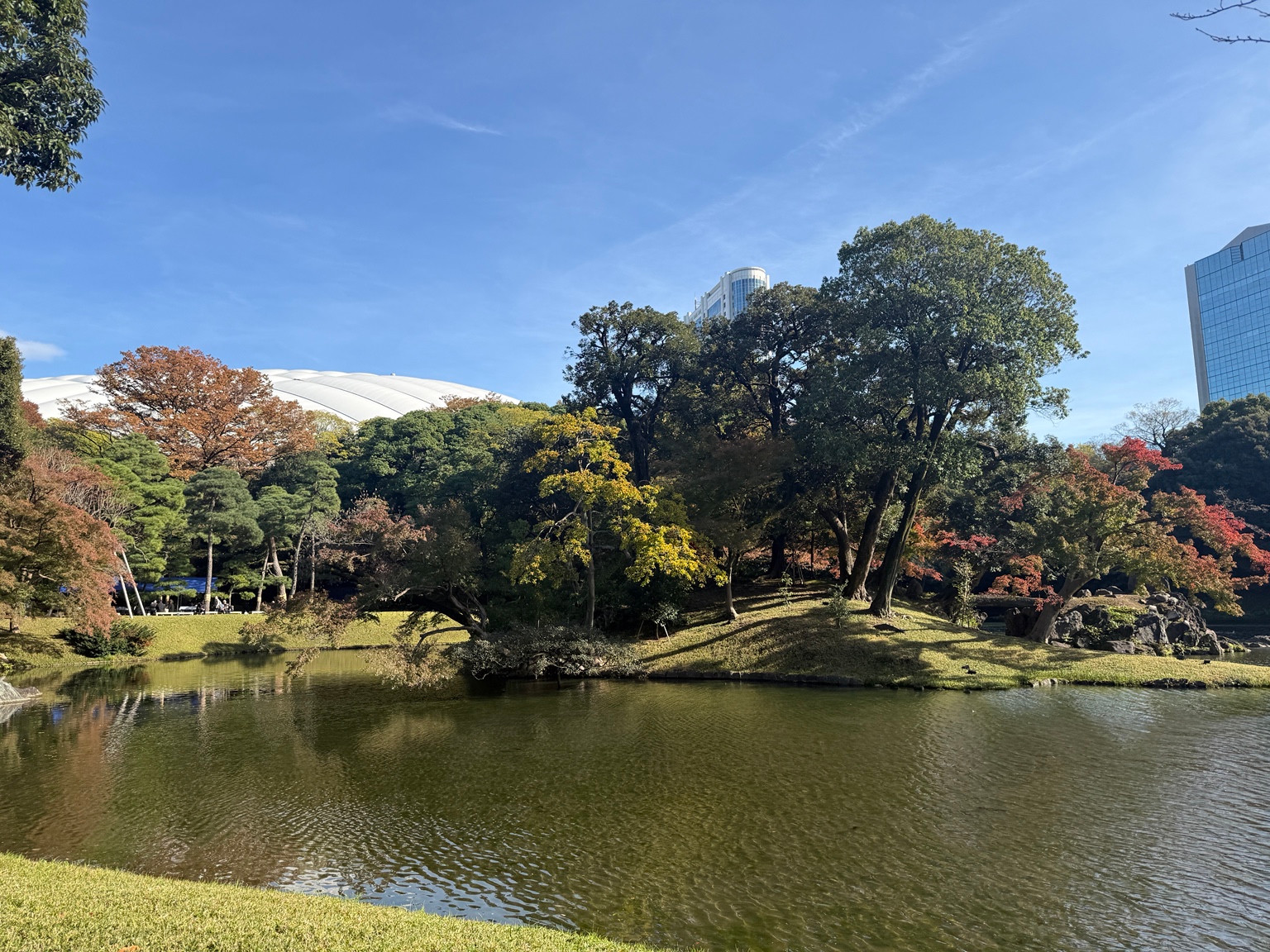
Do not assume that a November date guarantees peak foliage. Check recent photographs and the garden’s latest updates before visiting. One visit does not establish whether a particular year’s foliage is late, or why.
3. Construction affected the view around Tsutenkyo Bridge
Check construction notices if a particular bridge or view is the reason for your visit.
Work around Tsutenkyo Bridge and Oigawa affected the scenery. The official 2026 evening-event notice also states that these features cannot be viewed because of construction.
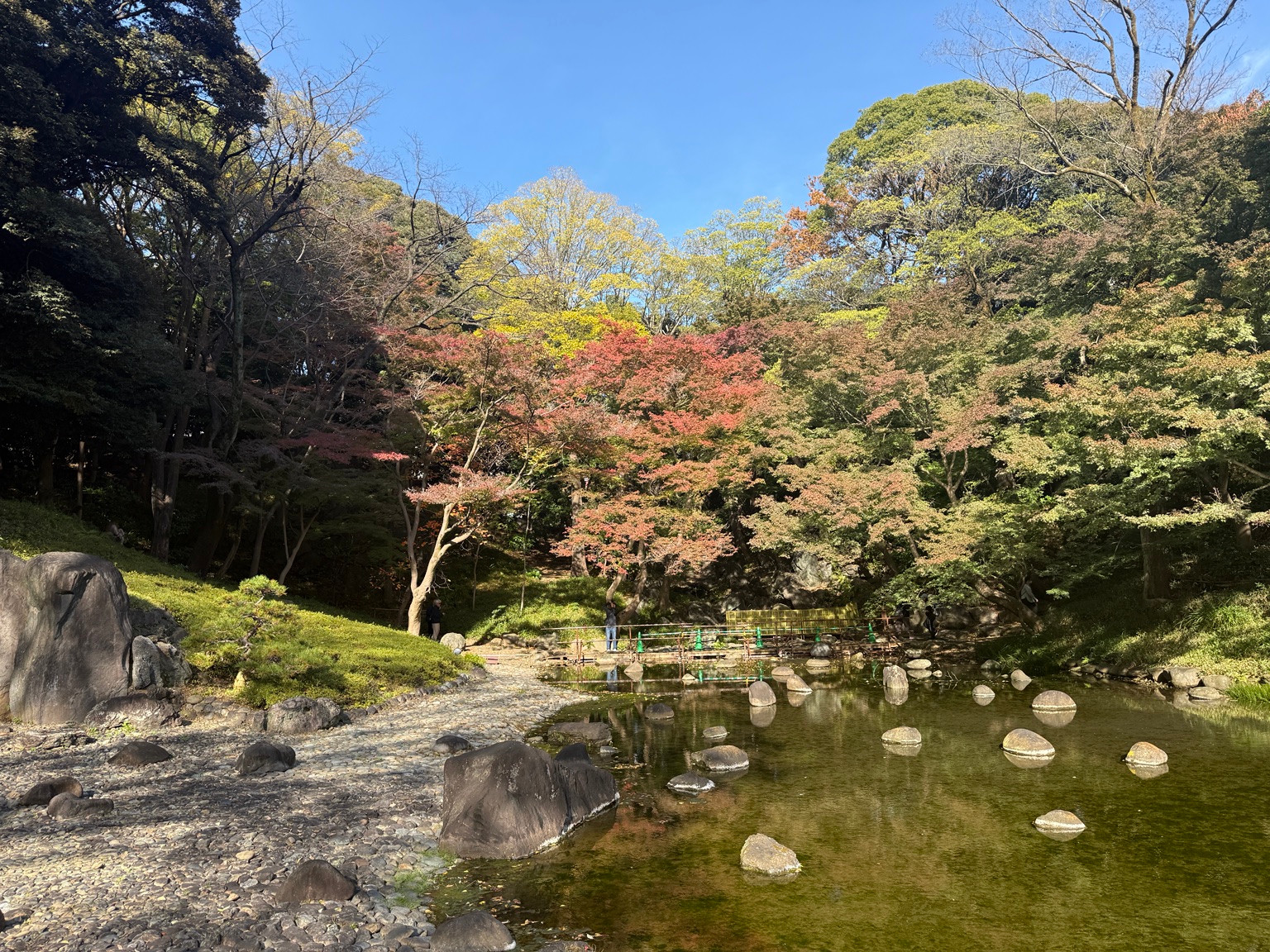
A guide photograph shows what a place can look like, not necessarily what you will see on your visit. I have not confirmed the completion date for this work; check the latest official notice before setting off.
4. Lotus flowers in a guidebook are seasonal, too
Autumn foliage and summer lotus flowers are not an all-year package.
This is particularly worth remembering on a first trip to Japan. A garden changes dramatically through the seasons. A photograph of flowers in a guidebook does not mean those flowers will be there whenever you arrive.
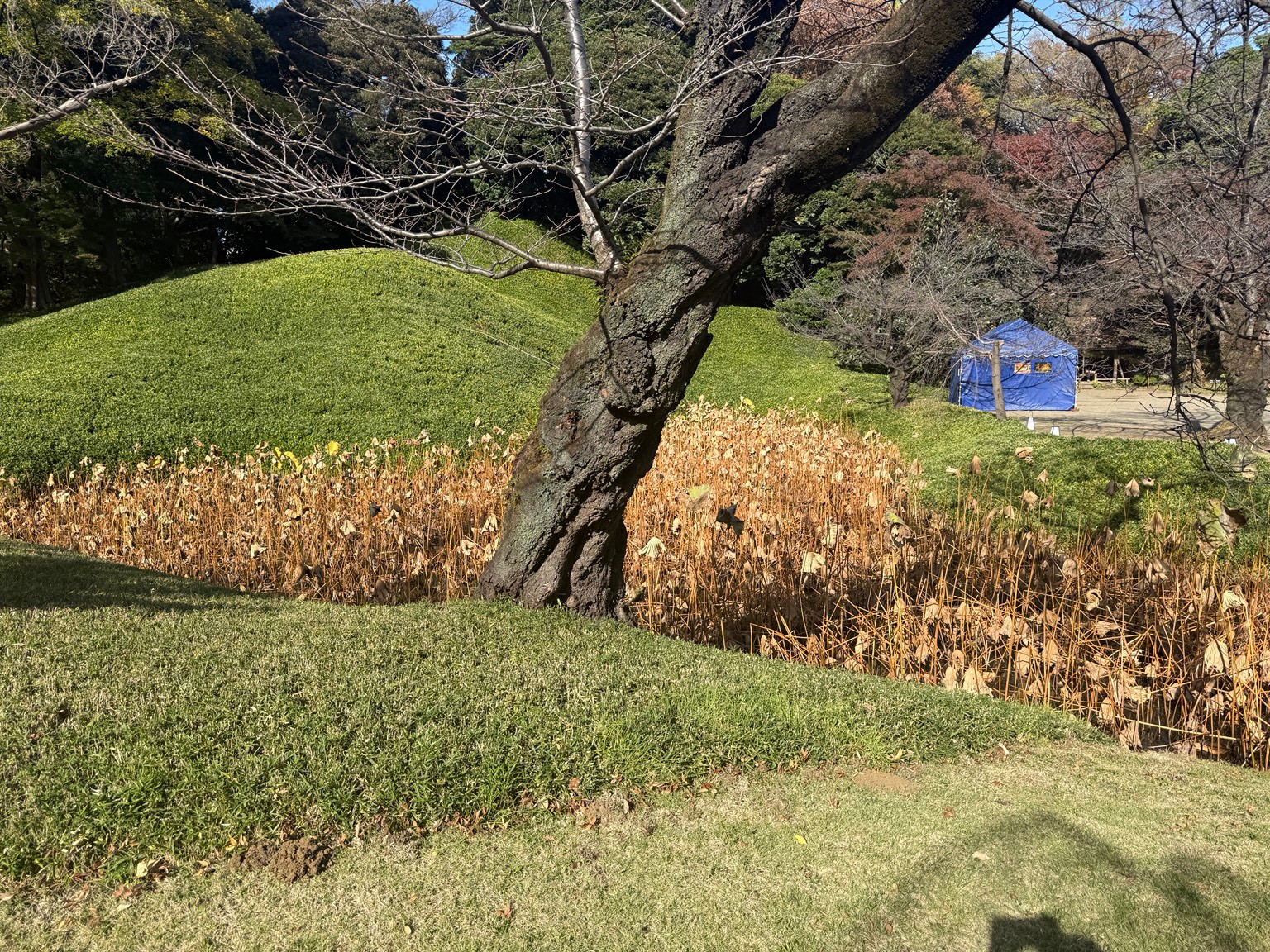
The faded plants are part of the seasonal landscape, but if flowers are your priority, check their season rather than relying on a favorite photograph.
What I did enjoy, and who may like it
The reflections of the sky and trees in Daisensui Pond were lovely. Finding features such as Engetsukyo Bridge and Horai Island also gives the walk a purpose. If you enjoy garden design and subtle seasonal changes rather than dramatic flowers or foliage, you may feel differently.
Many visitors appeared to be from overseas; to me, it felt like roughly half. I did not verify anyone’s nationality, so that is only an impression, not a visitor statistic. A place can be internationally well known without matching everyone’s taste.
A highlight: coffee and a Japanese sweet at the West Gate café
Despite my reservations about the garden, I really enjoyed the Japanese sweet and coffee at the café by the West Gate ☕.
The set I ordered cost ¥1,300. I could enjoy the view of the stream by Togetsukyo Bridge while taking a relaxing break from the walk. This was one of the good parts of my visit.
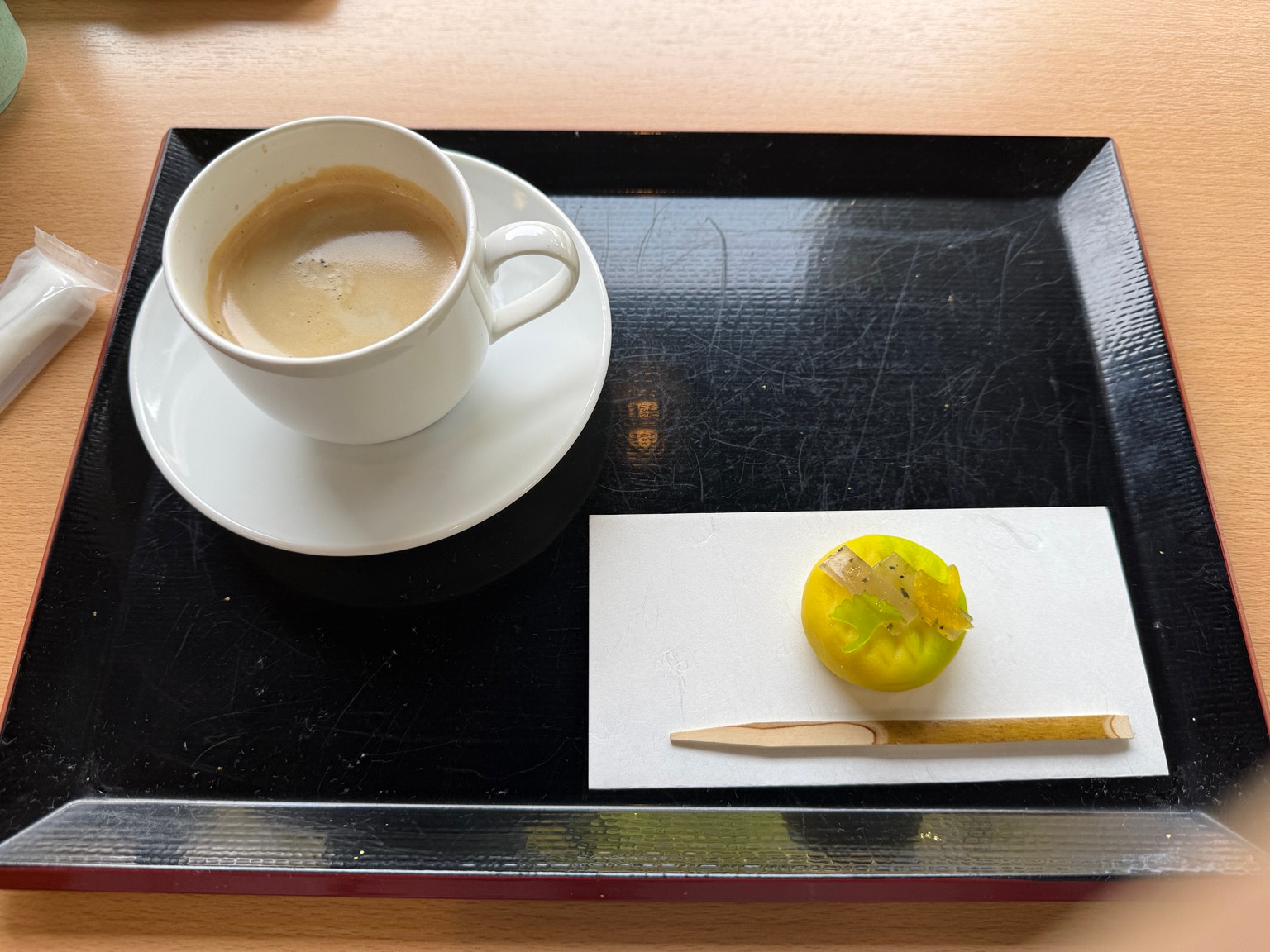
An English menu was available, and there was an English-speaking staff member when I visited. That made the café seem approachable for overseas visitors, too.
The price, menu and English-language assistance describe my experience on November 16, 2026. They may change; English-speaking staff are not guaranteed to be available at all times.
My personal preference: the Imperial Palace
For a garden walk in central Tokyo, I would personally prioritize the Imperial Palace.
On my previous walks there, I found the grounds clean, well tended and full of things to look at despite being free. I enjoyed that experience more than this particular visit to Koishikawa Korakuen.
This does not mean the entire palace is freely accessible. The Imperial Palace East Gardens are free, but normally close on Mondays and Fridays, with holiday exceptions and other closures. Check the Imperial Household Agency’s opening calendar (Japanese) before visiting.
Location, admission and access
📍 Address: 1-6-6 Koraku, Bunkyo-ku, Tokyo
Open Google Maps
🕘 Regular hours: 9am–5pm; last admission 4:30pm.
🎫 Regular admission: ¥300 for adults; ¥150 for visitors aged 65 and over.
🚃 Getting there: The West Gate is about 3 minutes on foot from exit C3 of Iidabashi Station on the Toei Oedo Line. The East Gate is about 5 minutes from JR Suidobashi Station’s West Exit. There is no dedicated parking.
Official information: Koishikawa Korakuen (Japanese). Details checked November 16, 2026.
Evening events have separate admission and hours. This review is based on a daytime visit; I did not experience or evaluate the illumination.
How to avoid disappointment
- Check recent photographs of the autumn colors.
- Read current construction notices for Tsutenkyo and Oigawa.
- Check the season of any flowers you want to see.
- Remember that lighting and camera angles affect guidebook photographs.
Frequently asked questions
Is mid-November peak foliage season?
The date alone cannot tell you. On November 16, 2026, my impression was that around 30% of the garden had autumn color. This is not a forecast or an official measurement. Check the latest official updates and photographs.
How much is admission?
Regular admission is ¥300 for adults and ¥150 for visitors aged 65 and over. Evening events have separate fees and hours.
Is English available at the café?
There was an English menu and an English-speaking staff member at the West Gate café when I visited. This describes that day, not a guarantee of assistance at all times.
Bottom line: check the season, foliage and construction first
I do not think everyone will find Koishikawa Korakuen disappointing. But on November 16, it did not match the tidy, richly colored autumn garden I had imagined.
Check recent foliage photographs, construction notices and the season of the plants you want to see. That is the simplest way to reduce the gap between a beautiful guidebook image and your own visit 🍁.

Comments