Japan, through a Japanese perspective. This is a concise English translation and adaptation of our Japanese Ginzan Onsen guide, originally written for Japanese readers asking, “Is this place disappointing?” We retain its concerns, positive views and visitor comments, with practical winter information for planning.
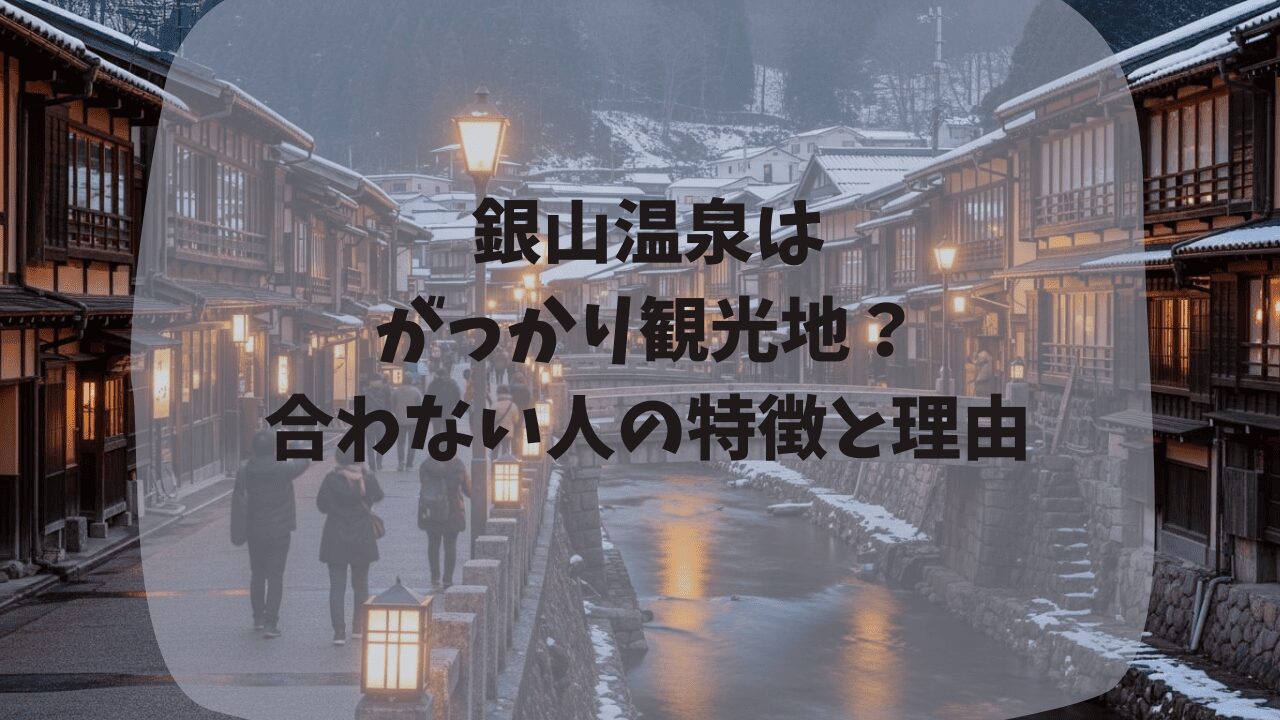
Ginzan Onsen’s wooden riverside inns and gas lamps are beautiful, but a compact scenic town is not the same as a full day of attractions. Whether the journey feels worthwhile depends on what you expect.
- Ginzan Onsen at a glance
- Where is Ginzan Onsen?
- Why opinions differ
- Five reasons Ginzan Onsen can disappoint
- How to avoid disappointment
- Visitor comments in our Japanese guide
- Day trip or overnight stay?
- Nearby places to consider
- Quick questions before you go
- Getting there in winter 2026–27
- Snow scenery comes with practical limits
Ginzan Onsen at a glance
Location
Obanazawa, Yamagata
A hot-spring town in northeastern Japan’s Tohoku region.
Main appeal
Architecture and atmosphere
Traditional wooden inns beside the river, gas street lamps, and hot springs.
Getting there
JR Oishida Station + bus
The Yamagata Shinkansen serves Oishida. Allow about 40 minutes for the onward bus ride, plus waiting time and possible weather delays.
Suggested visit
One to two hours + transport
A planning guideline for town sightseeing, not an admission limit. Add time for bathing, food, and queues.
Bathing and facilities
Check each venue
Opening hours, day-use access, prices, and bathing policies vary. Do not assume every ryokan accepts day visitors.
Winter 2026–27
Plan your route before arrival
Private-car restrictions are announced for December 19–March 7. Regular public buses and overnight guests follow different arrangements.
Sources: Yamagata tourism, JNTO, and official winter access guidance.
Where is Ginzan Onsen?
Ginzan Onsen is in Obanazawa, Yamagata, in northeastern Japan. The map shows the hot-spring town; plan your journey via Oishida Station or your accommodation’s arrival instructions.
Open Ginzan Onsen in Google Maps ↗
Why opinions differ
Our Japanese guide describes a small riverside sightseeing area that can suit a one- to two-hour stroll. That is a planning estimate, not an admission limit: bathing, meals, photographs and queues need extra time.
The historical streetscape is the main attraction. Visitors seeking architecture, photography or a quiet ryokan stay may love it; those expecting numerous attractions and activities can run out of things to do. Winter evenings and weekends can also be crowded, despite the peaceful photographs.
Five reasons Ginzan Onsen can disappoint
1. A ryokan stay can feel expensive
The Japanese guide highlights the gap between a budget stay and a traditional inn with dinner and breakfast. Compare the actual room, meals and cancellation terms for your dates rather than assuming the scenery alone guarantees good value. Prices vary; the original article’s indicative prices are not a current offer.
2. Day-use bathing choices are limited
Many inns focus on overnight guests, and day-use facilities may have restricted hours. Do not arrive expecting an unrestricted circuit of public baths. Check the specific facility before traveling, especially if you need a private bath or have questions about tattoo policies.
3. Winter crowds can make photography harder
Snow and gas lamps attract visitors to the same small streets. You may need to wait for a photograph or share the view with a crowd. A famous photo is not a promise of empty walkways.
4. The experience is mainly strolling, not activities
The wooden inns and riverside scenery are the point. If your ideal trip means moving between many museums or hands-on attractions, the compact town may feel too limited.
5. There are fewer dining choices than you might expect
The Japanese guide notes a limited choice of cafés and restaurants, rather than a large food-hopping district. Inn meals are an important part of an overnight visit. Check opening days and menus instead of relying on finding something at any hour.
How to avoid disappointment
- Plan a short scenic visit: allow one to two hours for the town itself, plus transport and anything you book.
- Check rooms early: compare availability well ahead for popular dates, and consider weekdays or another season.
- Plan evening viewing and your return together: arrive before the time you want to photograph, but follow any winter access arrangements.
- Choose meals and bathing in advance: confirm opening hours and whether day visitors are accepted.
- Reserve the relevant winter transport when appropriate: do not confuse the regular Oishida bus with the separate park-and-ride shuttle.
Visitor comments in our Japanese guide
The six comments below translate the wording presented in our Japanese article. It does not identify the individual source posts, authors or dates, so these have not been independently verified. They are not a representative survey, and the commenters’ nationality is not established.
Negative comments
“The hot-spring town was smaller than I expected, and just walking around took about an hour. I had imagined somewhere with lots of attractions, so it felt a little lacking…”
“I wanted to take a hot-spring bath on a day trip, but the facilities I could use were limited and there wasn’t much choice. Since it was an onsen town, I had expected to visit several public baths, so I was disappointed.”
“I went on a winter evening, but there were so many tourists that it took a while to find somewhere to take photos. I had imagined a quiet hot-spring town, so I was fed up with the crowds.”
Positive comments
“The sight of wooden inns along the river was very memorable. The gas lamps at night created a particularly peaceful atmosphere, and it was wonderfully photogenic.”
“The town was compact, just the right size for a leisurely walk to enjoy the streetscape. Even in a short time, I could forget everyday life and fully enjoy the hot-spring atmosphere.”
“Spending time looking at the hot-spring town at night stayed with me. I was happy to see a place said to have inspired Spirited Away.”
The last comment repeats a popular association, not an established film-production fact. As the Japanese article’s FAQ explains, Ginzan Onsen has not been established here as an officially announced model for Spirited Away. The streetscape may simply remind visitors of the film.
Day trip or overnight stay?
A day trip suits a stroll and photographs if the transport works for you. An overnight stay makes more sense if bathing, meals and the inn itself are part of what you want. Check transfers, parking, meal times and cancellation conditions with the property; they are not identical at every ryokan.
Nearby places to consider
Our Japanese guide suggests these contrasting stops. Its driving times are rough estimates, not a promise, and winter conditions can change the journey considerably.
- Yamadera (Risshakuji): a temple-and-mountain walk with many steps; roughly 90 minutes by car in the original guide.
- Mogami River boat ride: a way to enjoy the valley from the water; allow about an hour’s drive to the boarding area, and check the operator’s route and departures.
- Lake Tokura: a quieter lakeside walk in Obanazawa, approximately 25 minutes by car in the original guide.
Quick questions before you go
How long should I allow? One to two hours for a town walk is a starting point, not the whole travel day.
What about children or rain? Much of the visit is outdoors. Wear suitable shoes for slopes and paving, and shorten the walk if the weather makes it uncomfortable.
Is it ultimately boring? It is a stronger fit for scenery and a ryokan stay than for a busy activity schedule. Knowing that distinction is more useful than calling it universally good or bad.
Getting there in winter 2026–27
Regular bus from Oishida: The official winter guidance says no park-and-ride transfer is required for the regular Hanagasa bus. This public bus is separate from the Taisho Roman-kan shuttle and does not use its reservation system or time-based shuttle fares. Check the operator’s current timetable and return departures before traveling. Official winter access guidance.
Private or rental car: Day-trip drivers are covered by the announced December 19, 2026–March 7, 2027 restrictions and should use park-and-ride at Taisho Roman-kan. Overnight guests should follow their accommodation’s parking and arrival instructions. Vehicle restrictions.
Winter shuttle: The ride takes about ten minutes to Ginzanso, followed by approximately ten minutes on foot to the town entrance. Advance reservations are strongly recommended; the operator warns that unreserved passengers may wait over an hour. Booking closes at 17:00 Japan time the previous day. Recheck fares and operating details before purchasing, as the published information allows for changes. Shuttle details.
Plan the return before you go: The last outbound shuttle leaves Taisho Roman-kan at 18:00, and the last return leaves the stop in front of Ginzanso at 19:30. An outbound reservation gives priority on the return departure 90 minutes after your booked outbound departure (for example, 10:00 outbound → 11:30 return), with no additional return fare. You may take a different return departure, but may have to wait. This is not a guarantee of 90 minutes in the town; allow for the shuttle ride and walk. These arrangements apply to the winter park-and-ride shuttle, not the regular bus from Oishida Station. See the official shuttle timetable and return rules and official crowd forecast (updated November 17, 2026).
An optional round-trip sightseeing bus package from Oishida is also announced for December 25, 2026–March 7, 2027, subject to the published plan. It is a separate paid product, not a requirement for every train traveler. Official package announcement.
Snow scenery comes with practical limits
Wear warm layers and footwear suitable for slippery surfaces. The local guidance warns about icy ground and snow falling from roofs. It also states that the Nobesawa silver-mine ruins cannot be reached during the snowy winter period, so do not build a winter itinerary around visiting them. Official visitor guidance.
Allow extra connection time and keep your itinerary flexible. Good photographs are not worth rushing on an icy slope or missing the transport you need to leave.
Winter access and shuttle information rechecked November 19, 2026; other winter guidance retains its November 10 check date. Confirm current official notices before traveling. This translated guide does not claim a new firsthand visit.
Comments